 info@metalliccards.co.uk
 +44 203 332 0848

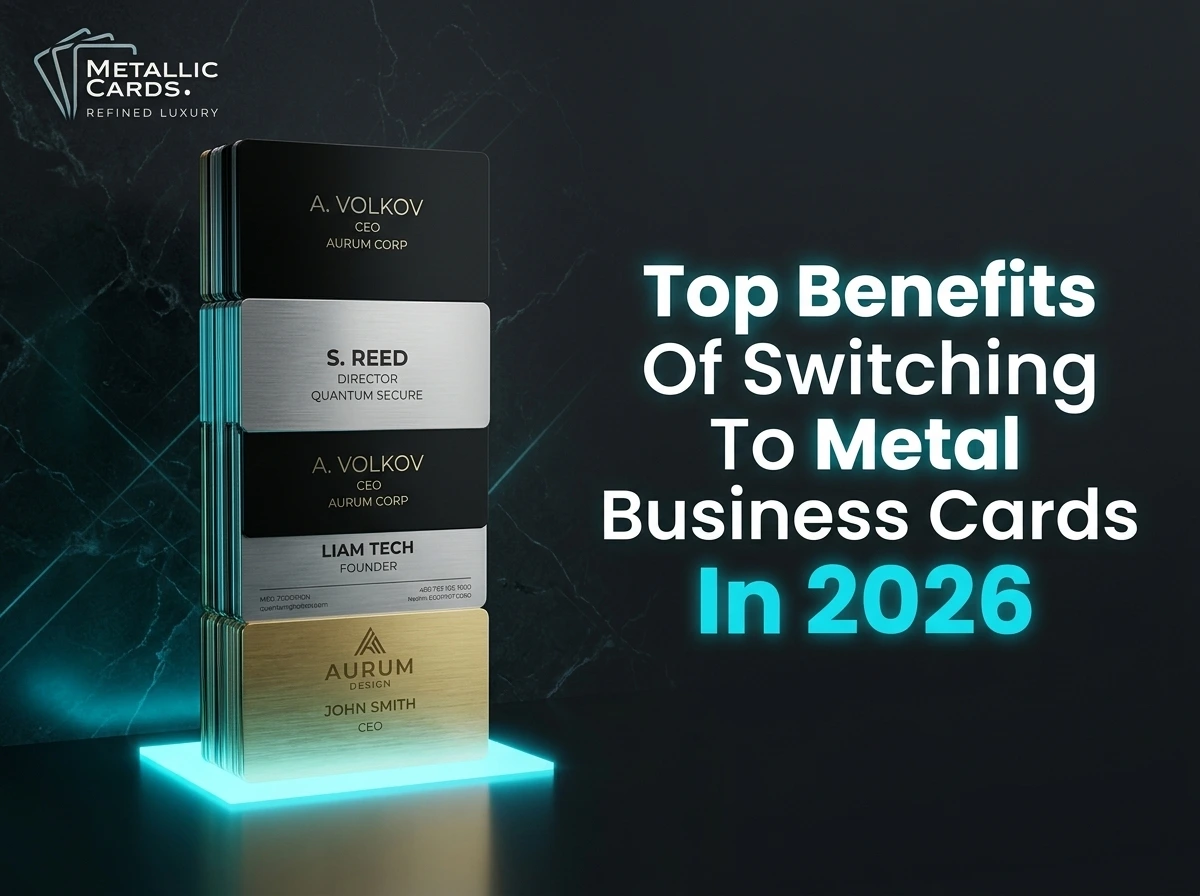
Top Benefits Of Switching To Metal Business Cards In 2026
In a world where most professional introductions happen through digital screens, a business card that feels different can make a lasting impression. Traditional paper cards still serve a purpose, but they can easily get lost in a wallet, forgotten in a pocket or discarded after a networking event.
Metal business cards offer a more distinctive alternative, combining durability, refined design and a tangible sense of quality. It could be a smart investment to switch to metal for professionals looking to strengthen their brand identity in 2026. The real question is whether these cards deliver enough practical value to justify their higher cost. This blog will guide you through the importance of metal business cards and their benefits.
Why Are Metal Business Cards Becoming Popular In 2026?
Professional networking is not just about exchanging contact details. People remember experiences and a carefully designed card can help you make a routine introduction feel more meaningful.
1. Create A Strong First Impression
First impressions are the most important, especially when you are meeting potential clients, investors or business partners. A metal card immediately feels different from ordinary paper, that give recipients something unexpected to hold and examine. Its weight, finish and precise detailing can help you communicate attention to quality before a conversation even begins.
For example, a property consultant who is meeting a high-value investor may use a brushed stainless steel card with understated lettering. The design reinforces a professional image without relying on flashy graphics. This is one reason business cards for premium look are gaining attention among brands that want their physical marketing materials to reflect their standards.
2. Improve Durability And Everyday Use
Paper cards can bend, tear and become damaged when they are exposed to moisture. Metal alternatives are generally more resistant to these everyday problems, but their durability depends on the material, coating and manufacturing quality.
For example, a stainless steel card can remain presentable through repeated handling and storage. This can make it useful for professionals who attend conferences, exhibitions and client meetings regularly. Scratches can still occur and thinner metals may bend under pressure, so it is important to choose an appropriate thickness.
3. Make Your Brand More Memorable
A distinctive card can give people a reason to pause. Recipients may remember its unusual material, engraved logo or cut-out design long after the end of a meeting. That extra recognition can help a business to stand apart in crowded industries where competitors offer similar services.
Metal cards are particularly suitable for architects, consultants, luxury retailers and creative agencies. A simple layout with a recognisable logo often works better than excessive decoration. The objective is not just to impress someone momentarily, but it is to make your brand easier to recall when a relevant opportunity arises.
What Are The Main Advantages Of Metal Business Cards?
The material offers practical branding opportunities beyond appearance that conventional printing methods may not provide as easily. The value of these cards depends on how well the card suits your audience, business goals and networking habits.
● Explore Different Materials And Finishes
The types of metal business cards that are available today include stainless steel, brass, aluminium and other specialised metal options. Each one of them offers a different balance of weight, cost, appearance and finishing possibilities.
Stainless steel suits businesses that are seeking a sleek, durable finish, and aluminium is lighter and often easier to carry in quantity. Brass can create a warmer and more traditional appearance, especially when it is paired with gold toned finishes. Black-coated metal offers a contemporary look, and polished surfaces produce a better effect. You should compare samples before ordering, because colours, textures and engraving results can vary between suppliers.
● Support Premium Brand Positioning
A well made metal card can reinforce the perception that a company pays attention to detail. This is valuable when a business sells high value services, where presentation contributes to the overall customer experience.
You can consider a bespoke jewellery designer that is presenting a polished brass card with carefully engraved details. The card complements the craftsmanship that is associated with the business. Expensive materials still cannot replace excellent service or a reliable reputation. The strongest branding happens when the quality of the card matches the quality customers experience.
● Personalise Your Design More Creatively
Metal cards support several design approaches that include laser engraving, etched patterns, selective cut-outs and contrasting finishes. These techniques allow businesses to develop a distinctive visual identity without overcrowding the design.
A technology consultant may choose a matte black card with silver engraving and a design studio can use geometric cut outs that reflect its creative work. QR codes can also connect recipients to portfolios, booking pages or contact information. You should test the code before production, maintain sufficient contrast and include essential contact details so the card remains useful even when someone does not scan it.
How To Switch To Metal Business Cards: Step-By-Step Guide
Moving away from paper does not need to be complicated. A clear plan helps you control costs, maintain brand consistency and choose a design that works in real networking situations.
1. Define Your Audience And Budget
You should start by identifying who will receive your cards and what impression you want to create. A luxury service provider may benefit from a heavier and engraved card and a startup distributing hundreds at trade shows may prefer lightweight aluminium.
You should set a realistic budget before comparing suppliers. Must include design fees, finishing costs, minimum order quantities and delivery charges instead of looking at the unit price alone.
2. Choose The Right Printing Partner
You should look for a supplier experienced in metal fabrication and professional card finishing. Must review material specifications, production timelines, engraving quality and replacement policies before you place an order.
A reputable business card printing company in UK can be especially useful for businesses that are seeking domestic production, clear communication and delivery within the UK. You can request a physical sample where possible. Photographs do not always communicate the true thickness, texture or weight of a finished card.
3. Prepare And Test Your Artwork
You should use a clean design with readable typography, accurate contact information and enough contrast between the text and the metal surface. Must confirm whether the supplier needs vector artwork and ask about minimum line thicknesses for engraving or cut-outs.
You should also check the final proof carefully. Small text that looks clear on a computer screen may become difficult to read on a reflective surface. Ensure you test QR codes, verify telephone numbers and confirm that the logo reproduces correctly before approving the production run.
4. Introduce The Cards Strategically
You do not necessarily need to replace every paper card immediately. It is better to begin by using metal cards for important client meetings, industry events, investor introductions and premium partnerships.
You should track feedback informally and notice whether recipients ask questions about the design, keep the card or follow up through its contact details. These observations cannot prove that the material caused a sale, but they can help you to decide whether the investment suits your networking strategy.
Are Metal Business Cards Worth The Extra Cost?
Metal cards generally cost more than standard paper alternatives because of their materials, specialised production and finishing requirements. The advantages of metal business cards are strongest when a memorable physical introduction is more important than cheaply distributing large quantities.
A small batch may be worthwhile for a consultant securing a few valuable clients. Conventional cards or digital contact-sharing tools may be more economical for a business attending a large exhibition with thousands of visitors. You must consider the likely audience, expected usage and potential value of each connection before you commit to a large order.
Questions Readers Always Ask
-
Are metal business cards suitable for small businesses?
They can be suitable, especially for independent consultants, boutique retailers and service providers who rely on personal relationships. A small initial order can help you to control spending. Businesses that distribute cards in very high volumes should compare the cost against more affordable alternatives before they make the switch.
-
Do metal business cards scratch easily?
Scratch resistance often depends on the metal, surface treatment and coating. Brushed finishes can make minor marks less noticeable, and polished or coated surfaces may show them more clearly. You should store cards separately from keys and other hard objects to help you to maintain their appearance.
-
Are metal business cards environmentally friendly?
The environmental impact of the metal cards depends on the metal, manufacturing process, recycled content, transportation and end-of-life handling. Some metals are recyclable, but recycling is not automatic. You should ask suppliers about recycled materials and local recycling options, and order only the quantity you realistically expect to use.
Final Verdict
Metal business cards offer a distinctive way to strengthen professional branding in 2026. Their durability, tactile appeal and customisation options can help businesses to create memorable introductions and reinforce a premium image. Success often depends on choosing suitable materials, keeping the design readable and using the cards strategically instead of treating them as a guaranteed marketing solution. You should start with a small batch, assess the response and compare the results with your existing approach.

As the content specialist for MetallicCards.co.uk, I write about premium metal and metallic business cards for UK businesses. My content covers branding tips, design trends, and luxury finishes that help professionals stand out. I aim to guide brands in creating strong, memorable first impressions through high-quality card solutions.