 info@metalliccards.co.uk
 +44 203 332 0848

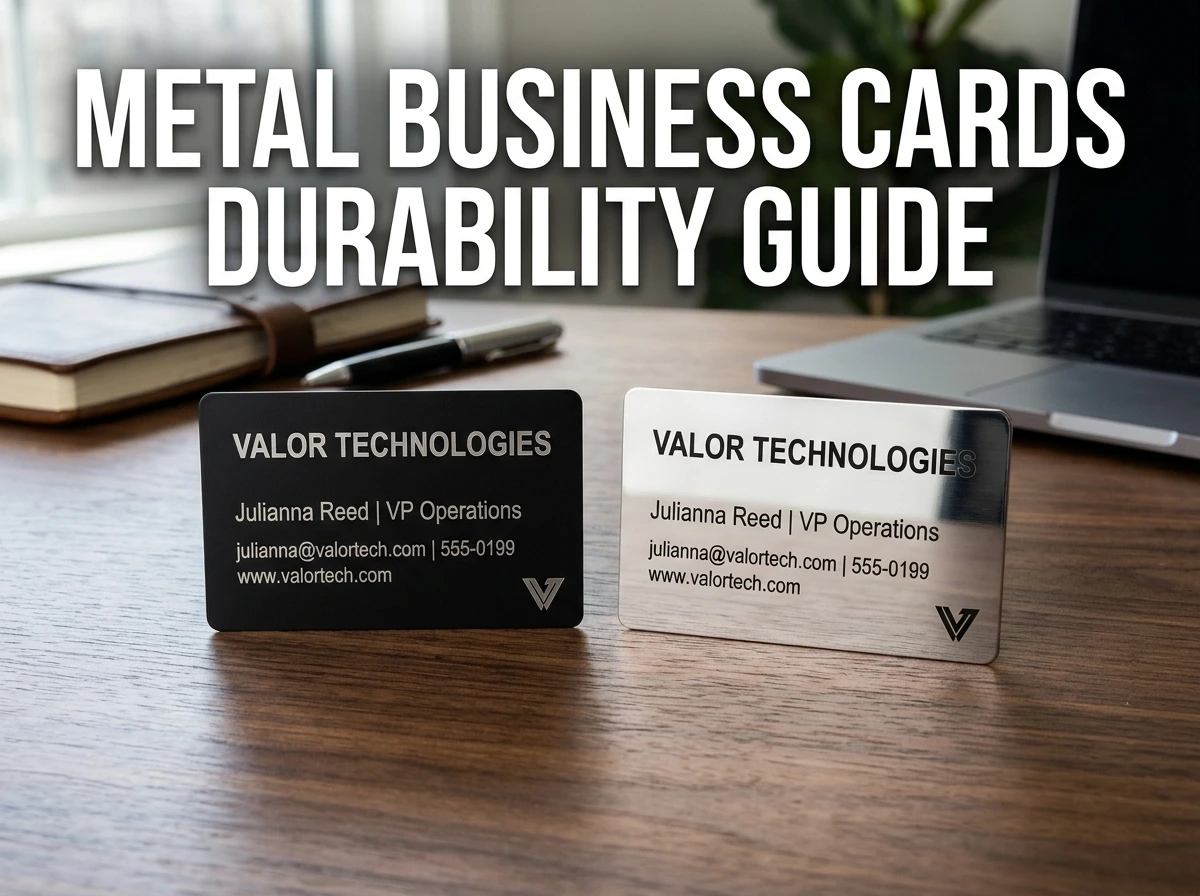
How Long Do Metal Business Cards Last? Durability Guide
Open your wallet after a few months and look at the paper card sitting behind your bank cards. The corners have gone soft and the edges look fuzzy. A thumb has smudged the ink. Nobody wants to hand that over at a first meeting.
Metal cards hold up far better than paper, but they don’t all age the same way. A well made one can stay sharp for years while a thin painted one picks up scratches much sooner. It comes down to the metal, the finish and how you carry it. This guide covers what wears a card down, how to protect it and whether the price is worth it.
What Are Metal Business Cards Made Of?
Most custom metal business cards are made from stainless steel, aluminium, brass or copper. Each one feels different in the hand and wears in its own way.
| Metal | What it’s like | Where it wears first |
| Stainless steel | Heavy, stiff, hard to bend | Fine scratches on polished surfaces |
| Aluminium | Light, often anodised in colour | Corners and edges |
| Brass | Warm gold tone, slightly softer | Tarnish, unless it has a clear coating |
| Copper | Reddish and soft | Darkens over time |
The finish matters as much as the metal. A painted card has a layer of colour sitting on top, so it can chip or scratch. Anodised and plated finishes are part of the surface, though plating is thin and shows wear at the edges first. Engraving is cut into the metal itself, so it stays. A printed design sits on top and can rub off.
How Long Do Metal Business Cards Last?
Metal business cards can last for years with normal care. They outlast paper and PVC, and the finish usually wears out before the metal does.
What stays the same
Engraved text is cut into the metal, so it stays readable. The card also keeps its shape, even after months in a wallet.
What changes first
- Painted colour can chip
- Polished steel picks up fine scratches
- Corners and edges show marks before the flat faces do
How it compares
- Paper: corners go soft within weeks
- PVC: lasts longer, but scratches build up and the print dulls
- Metal: picks up small surface marks and keeps its shape
What shortens its life
A hard knock can dent a thin card and keys or coins will leave marks. Two identical cards can age very differently, depending on whether one has its own slot and the other rides loose in a bag. Kept in a holder, the lifespan of a metal card is usually counted in years, not months.
Common Causes of Wear on Metal Cards
Most damage comes from other objects rubbing against the card, not from the metal giving way.
- Keys and coins: These cause the fine scratches you often see on polished cards.
- Loose items in a bag: Pens, chargers and zips rub the surface every time the bag moves.
- Painted or coated finishes: The colour can chip or fade sooner than it would on bare or anodised metal.
- Thin cards: A very thin card can bend if it is pressed under a laptop or sat on in a back pocket.
- Drops and harsh cleaners: A fall onto a hard floor can mark the edges, and strong cleaning products can dull some finishes.
Nearly all of this can be avoided with how the card is stored, which is where the next section picks up.
How to Keep Your Metal Cards Looking New
The simplest way to protect cards from scratches is to keep them away from everything else you carry. A few small habits do most of the work.
- Give them their own slot. A card holder or a separate wallet pocket stops cards rubbing against keys and coins.
- Check the lining. A holder with bare metal inside can mark a card. Soft felt or fabric is safer, especially if printed cards sit in the same case.
- Wipe them gently. A dry microfibre cloth clears fingerprints and dust. Strong cleaners can dull some finishes, so leave them out.
- Keep them out of loose bags. Pens, chargers and zips scratch the surface. A zipped inside pocket is better than the bottom of a bag.
Cards you hand out often need a little more protection. Durable business card sleeves add a thin layer between the card and everything around it, which helps at events where cards get passed around and put back in pockets. A sleeve cuts down on marks but won’t stop every knock, so it works best alongside a holder.
Is a Metal Card Worth the Cost?
They cost more upfront than paper. A paper card is often gone after one meeting but a metal card can be handed over again and again and still look sharp. That spreads the price across every use.
A simple check is to divide the price by the number of times you expect to hand the card out. A card that stays in a holder for a few years and comes out at every meeting usually works out cheaper per use than the metal business cards cost suggests.
What changes the price:
- The metal: stainless steel, aluminium, brass and copper are all priced differently
- Thickness: heavier cards use more material
- Finish: plated, anodised, brushed or painted
- Engraving: simple text costs less than a detailed logo
- Quantity: larger orders bring the cost per card down
If you meet clients regularly and need business cards for premium look, the extra cost is easy to justify. If you only hand out a few cards a year, a smaller order may make more sense.
Clear All Doubts About The Durability Of Metal Business Cards
-
How long do metal business cards last?
With normal care, they can last for years. The engraving stays readable, so the finish and the edges are usually the first places to show wear. Keeping the card in a holder makes the biggest difference to how long it stays sharp.
-
Which metal is best for business cards?
Stainless steel is the usual choice for strength. Aluminium is lighter, and brass and copper have a warmer look but can darken over time. Pick the metal based on how often the card will be handled and carried.
-
Can scratches be removed from a metal business card?
Light marks on bare metal can sometimes be polished out with a soft cloth. Painted or anodised finishes can’t be buffed without damage, so ask the maker before trying anything on your own.
-
Can a metal business card have a QR code or NFC chip?
Yes. A QR code can be engraved straight into the card. NFC chips can be added too, but metal can weaken the signal, so ask whether the card has been tested on common phones.
-
Are metal business cards too thick for a wallet?
Some are. Thickness varies between makers, and a heavier card may not slide into a slim holder. Check the measurements before ordering, and test a sample in your own wallet if you can.
Let’s Conclude This Guide
A card that still looks good after months in a wallet says something small about the person who gave it. Metal can deliver that when the finish suits the way you carry it. The best way to decide is to think about your own week. Where will the card be kept and how often will it come out? Choosing a metal and a finish gets much easier once you are clear about these things.

As the content specialist for MetallicCards.co.uk, I write about premium metal and metallic business cards for UK businesses. My content covers branding tips, design trends, and luxury finishes that help professionals stand out. I aim to guide brands in creating strong, memorable first impressions through high-quality card solutions.